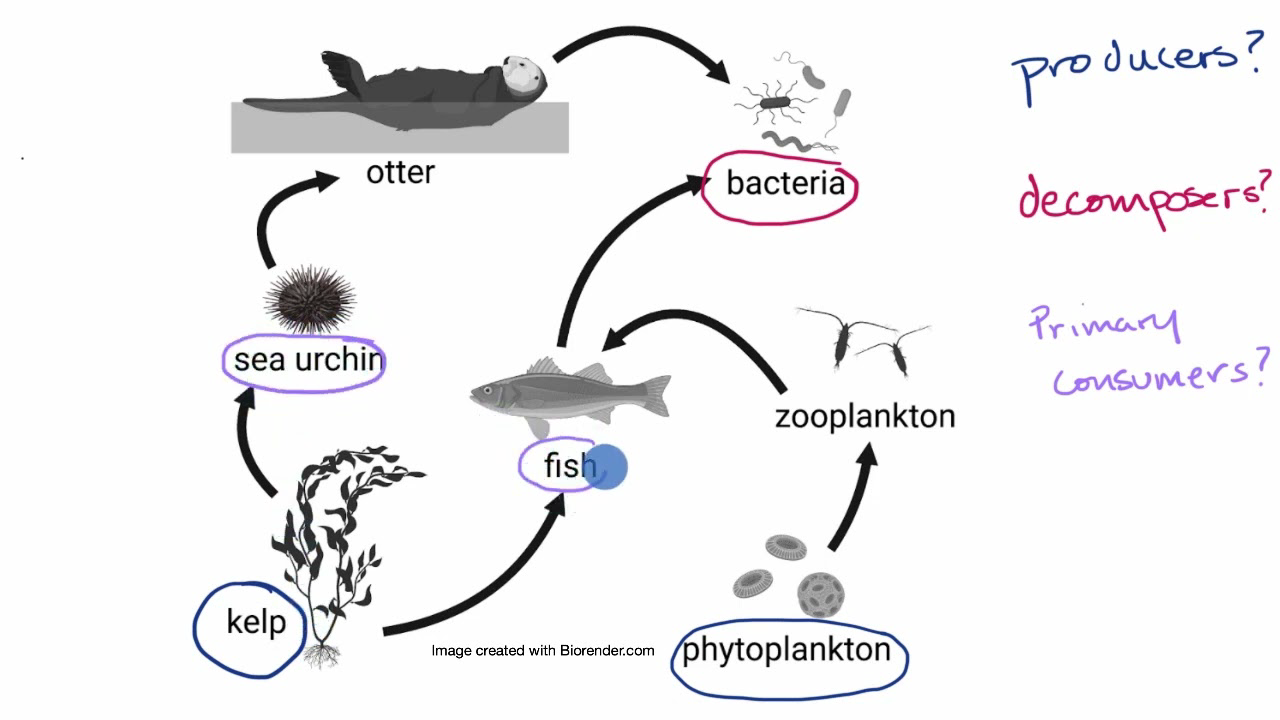
Flickr Photo Sharing Biology Diagrams The Cyclical Nature of the Food Chain A cyclical food chain means that even the most fearsome creatures can become a source of nutrients to lower-order consumers and decomposers. Rawpixel Ltd / CC BY 2.0. In any type of ecosystem, a "food chain" can be defined as a series of organisms depicting the transfer of energy (in the form of

The freshwater pond ecosystem is finely balanced because of the food chain close food chain A sequence (usually shown as a diagram) of feeding relationships between organisms, showing which

Characteristics and changes ... Biology Diagrams
This food web shows the role played by invertebrates (animals without backbones), such as mayflies and stoneflies, in freshwater ecosystems. The arrows indicate what eats what. Invertebrates feed on living and dead plant matter, and on each other. Invertebrates are an important link in the food

A food chain in a grassland ecosystem may consist of grasses and other plants, grasshoppers, frogs, snakes and hawks (Figure 8.3). In a freshwater aquatic ecosystem like a pond, the organisms in the food chain include algae, small animals, insects and their larvae, small fish, big fish and a fish-eating bird or animal (Figure 8.4). A food chain A typical pond food chain is much more complex than simple predator-prey relationships. pam fray / CC BY-SA 2.0. In every natural environment, biological patterns exist to maintain a balance. When a distinct set of patterns, some of which are readily observable, are present, an ecosystem is able to function and persist as a singular and complex unit. The freshwater food web shows us all the connections between food chains in an ecosystem. The web gets even more complex with omnivores , which eat both plants and other animals!
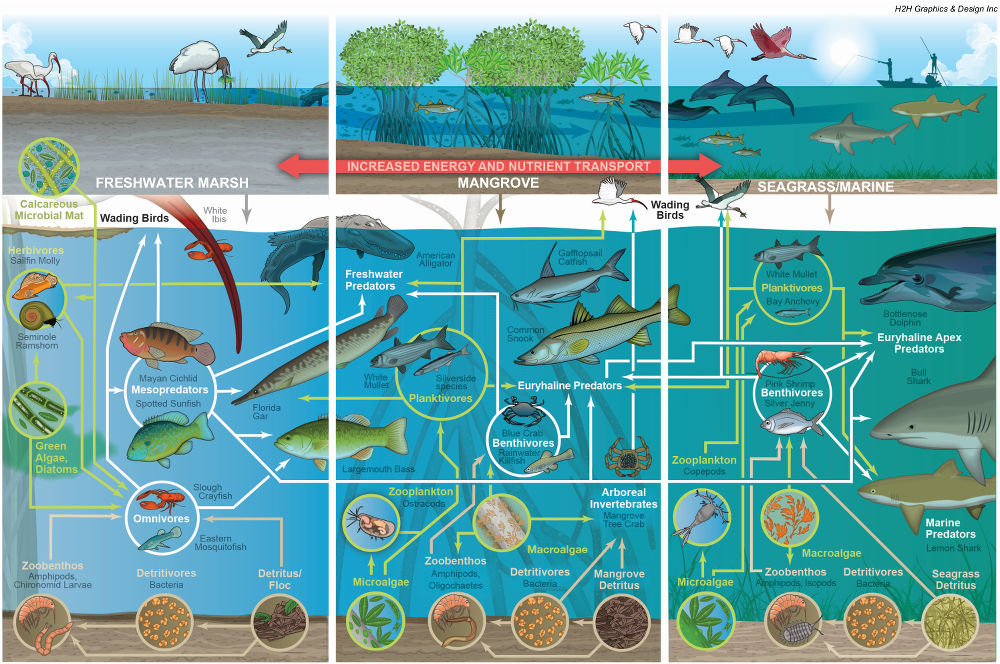
Food Chain of a Pond Ecosystem (Diagram & Facts) Biology Diagrams
Freshwater ecosystems include rivers, lakes, ponds, and streams, where life prospers in the flowing and still waters. These ecosystems begin with microorganisms and aquatic insects, providing sustenance for fish, amphibians, and birds.. These food chains are susceptible to changes in water quality, temperature, and flow and used as indicators of environmental health.